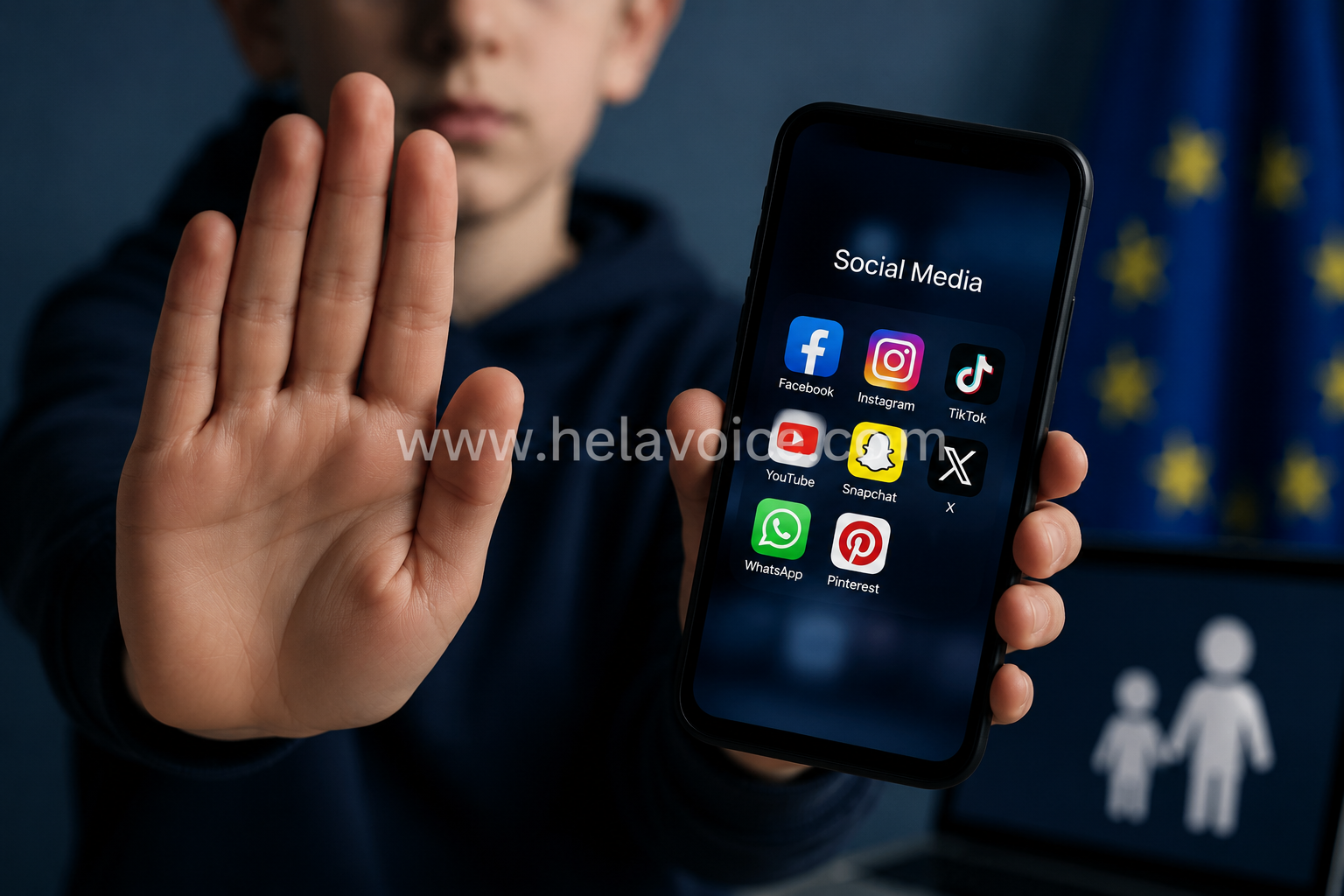
The European Union is considering introducing stricter regulations to limit children’s access to social media platforms as concerns continue to grow over online safety, mental health risks, and digital addiction among young users.
European Commission President Ursula von der Leyen revealed the proposal while speaking at a summit on artificial intelligence and children held in Copenhagen, stating that European authorities must now seriously examine whether minors should face tighter restrictions when accessing social media services.
According to von der Leyen, an expert panel has already been appointed to study the issue and provide recommendations by July. Based on those findings, the European Commission could move forward with new legal proposals as early as this summer.
She stressed that the discussion is no longer simply about whether children should use social media, but rather about whether powerful social media platforms should be allowed unrestricted access to children and teenagers.
“The issue is not whether young people should have access to social media, but whether social media should have unrestricted access to young people,” von der Leyen said during the summit.
Several European countries, including Denmark and France, have already been pushing for stronger age restrictions and tighter controls on social media use among teenagers. Governments across Europe are increasingly expressing concern about the impact of online platforms on children’s mental health, attention spans, sleep patterns, and overall well-being.
The European Union has also intensified pressure on major technology companies in recent months regarding child protection and digital safety standards. Investigations have already been launched into platforms including TikTok, Facebook, and Instagram over concerns about how effectively they protect minors online.
Last month, EU regulators accused Meta — the parent company of Facebook and Instagram — of failing to adequately prevent children under 13 from accessing its platforms. Earlier this year, TikTok also faced criticism from European regulators over platform features described as potentially addictive for younger users.
Under the EU’s Digital Services Act, major online platforms found violating digital safety rules could face significant financial penalties and stricter regulatory action.
For Sri Lanka, the growing global debate around children’s social media use could eventually influence future local discussions on digital regulation, online safety laws, and youth internet protection policies. Sri Lankan parents, educators, and mental health professionals have also increasingly raised concerns in recent years regarding excessive screen time, cyberbullying, harmful online content, and social media addiction among school-aged children.
While Sri Lanka currently does not have strict legal age-based social media restrictions similar to those being discussed in Europe, experts say international developments often shape future policy conversations in smaller digital markets.
Technology analysts note that governments worldwide are now facing increasing pressure to balance internet freedom with stronger protections for children in rapidly evolving digital environments. The rise of artificial intelligence, algorithm-driven content, and short-form video platforms has further intensified concerns over how young users interact with online systems.
What happens next will depend on the recommendations submitted by the EU expert panel in July. If approved, the proposed measures could become some of the strongest social media restrictions for minors introduced anywhere in the world and may influence digital safety policies globally.