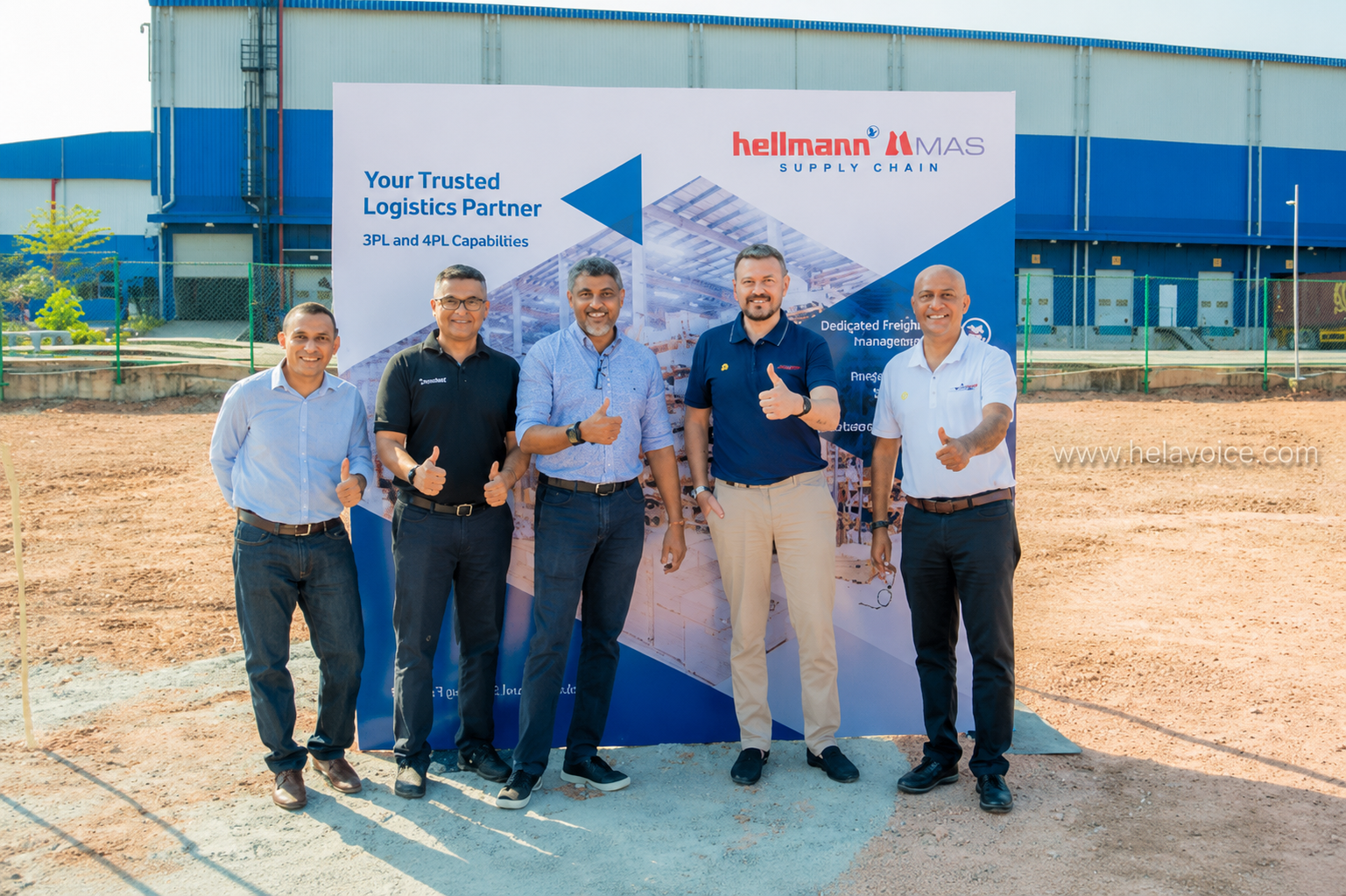
Global logistics company Hellmann Worldwide Logistics and Sri Lankan apparel giant MAS Holdings have announced plans to establish a new fashion logistics hub in Kimbulapitiya, Sri Lanka, in a move expected to strengthen the country’s growing role in international apparel supply chains.
The new logistics facility will be located just a few kilometers away from Bandaranaike International Airport and is expected to serve as a key regional distribution center within Hellmann’s expanding South Asian logistics network. Officials say the hub will support fashion supply chains connecting Asia, Africa, and Europe.
According to project details, the modern facility will cover more than 8,000 square meters and will feature climate-controlled storage systems, humidity management technology, and solar-powered infrastructure aimed at improving operational efficiency and environmental sustainability.
Industry representatives say the project represents another major step toward strengthening Sri Lanka’s reputation as a competitive global apparel manufacturing and logistics destination. The country’s apparel sector remains one of Sri Lanka’s largest export industries and a major source of foreign exchange earnings.
MAS Holdings stated that the partnership with Hellmann would help the company move beyond traditional garment manufacturing by offering faster, more integrated, and technology-driven supply chain solutions for international fashion brands.
Meanwhile, Hellmann Worldwide Logistics emphasized that Sri Lanka’s strategic geographic location in the Indian Ocean makes it an ideal gateway for international trade, logistics operations, and regional fashion distribution networks.
For Sri Lanka, investments in logistics infrastructure are increasingly viewed as essential for maintaining competitiveness within the global apparel and export industries. Faster delivery systems, modern warehousing, and integrated supply chains have become critical requirements for international fashion companies operating in highly competitive global markets.
Sri Lanka’s apparel sector has been under pressure in recent years due to global economic uncertainty, changing consumer demand, rising operational costs, and increasing competition from lower-cost manufacturing countries in Asia. Industry leaders have therefore been focusing on value-added services, sustainability, and supply chain efficiency to remain competitive internationally.
The new logistics hub is also expected to support Sri Lanka’s ambitions of becoming a regional logistics and trade center due to its strategic location near major international shipping and aviation routes. Experts say closer integration between manufacturing and logistics operations can help reduce delivery times and improve reliability for global buyers.
The inclusion of solar-powered systems and environmentally controlled infrastructure also reflects the growing emphasis on sustainable manufacturing and logistics practices within the global fashion industry. Many international brands are now demanding stronger environmental compliance and lower carbon footprints from suppliers and logistics partners.
Economic analysts note that large-scale investments by international logistics firms can also create employment opportunities, support export growth, and improve confidence among foreign investors looking at Sri Lanka’s long-term economic recovery prospects.
What happens next will involve the construction and operational development of the facility, with both companies expected to further expand regional logistics partnerships and supply chain services in the coming years.