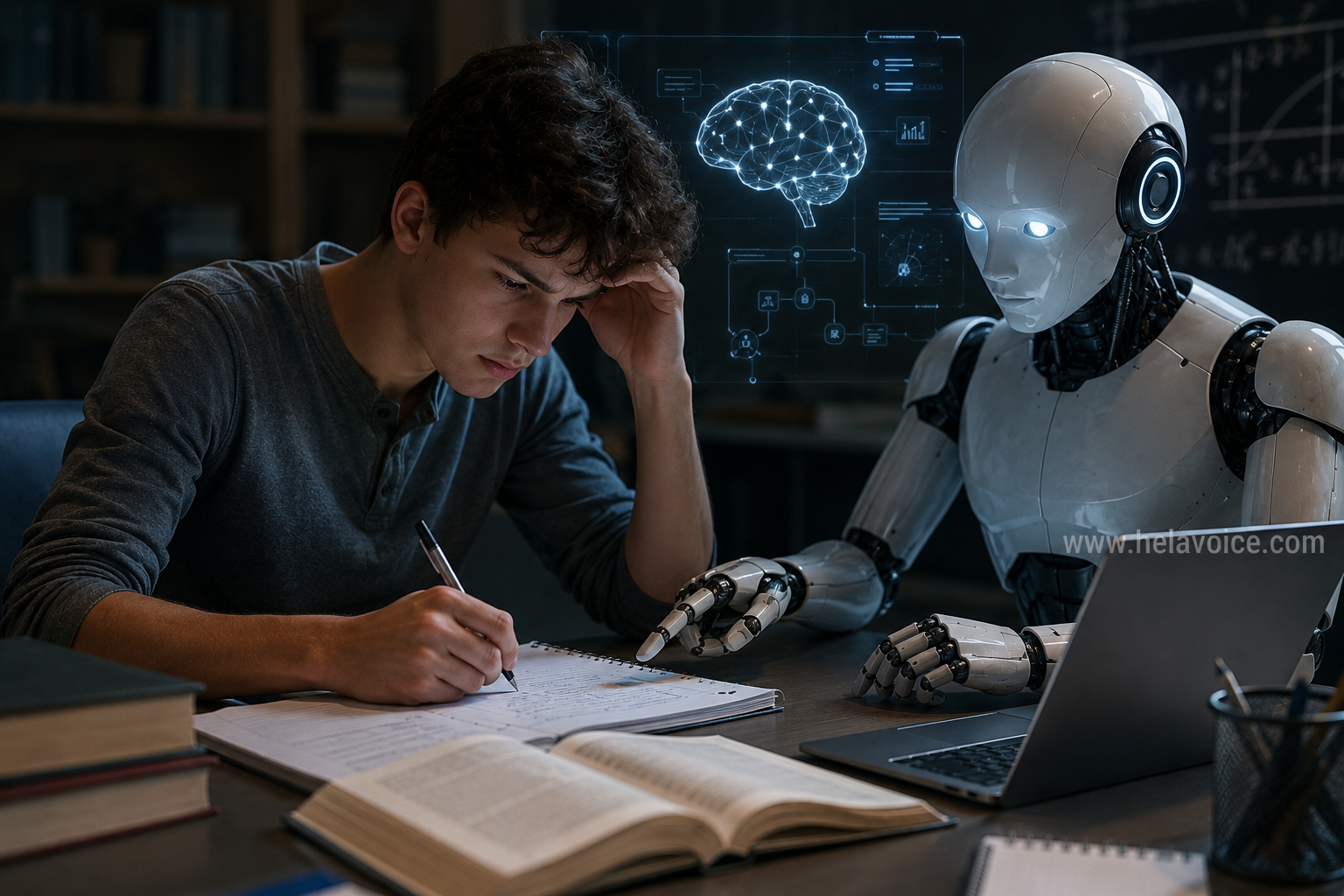
Scientists and technology experts are raising fresh concerns that excessive dependence on artificial intelligence (AI) tools could gradually weaken human thinking, curiosity, and problem-solving abilities in the future.
According to international reports, Britain’s Royal Observatory Greenwich has warned that people may begin losing the habit of questioning, exploring, and critically analyzing information if they become too reliant on AI-generated answers for everyday learning and decision-making.
Paddy Rodgers, head of the institution, stated that many of history’s greatest scientific discoveries were achieved through careful observation, experimentation, and years of independent thinking — long before the existence of modern computers or artificial intelligence systems.
He warned that modern AI platforms increasingly provide users with fast, direct answers, which may discourage deeper learning and reduce motivation to investigate subjects independently. Experts fear this could eventually impact creativity, curiosity, and analytical thinking skills, particularly among younger generations growing up with constant access to AI-powered tools.
At the same time, scientists also acknowledge that artificial intelligence continues to deliver major benefits across research, medicine, education, and technology. AI systems such as AlphaFold have already contributed to significant scientific breakthroughs, especially in areas such as biology and medical research.
Educators and researchers say AI can become a valuable support tool if used responsibly to assist learning rather than completely replacing human thinking and problem-solving processes. Many experts believe the key challenge is finding the right balance between technological convenience and maintaining independent intellectual skills.
The debate comes as AI-powered features rapidly expand across major digital platforms including Google, TikTok, and X. AI-generated summaries, automated search results, chat assistants, and recommendation systems are increasingly shaping how millions of people consume information online.
For Sri Lanka, the growing global influence of artificial intelligence is becoming increasingly relevant as schools, universities, businesses, and government institutions gradually adopt AI-driven technologies. Students and young professionals are especially using AI tools for research, writing assistance, translations, coding, and education-related tasks.
However, education experts in Sri Lanka and elsewhere have also expressed concerns that overdependence on AI-generated content could negatively affect critical thinking, creativity, writing skills, and independent learning habits among students if not properly guided.
Technology analysts note that while AI can dramatically improve productivity and access to information, human judgment, creativity, emotional intelligence, ethics, and original thinking still remain areas where people continue to outperform machines.
Meanwhile, discussions surrounding AI regulation, digital literacy, and responsible technology use are expanding globally as governments and institutions attempt to understand the long-term social impact of rapidly advancing artificial intelligence systems.
Experts say future education systems may increasingly focus not only on teaching students how to use AI effectively, but also how to question, verify, and critically evaluate AI-generated information rather than accepting it blindly.
What happens next will likely depend on how societies balance the benefits of AI technology with efforts to preserve human creativity, curiosity, and independent thinking in the digital age.