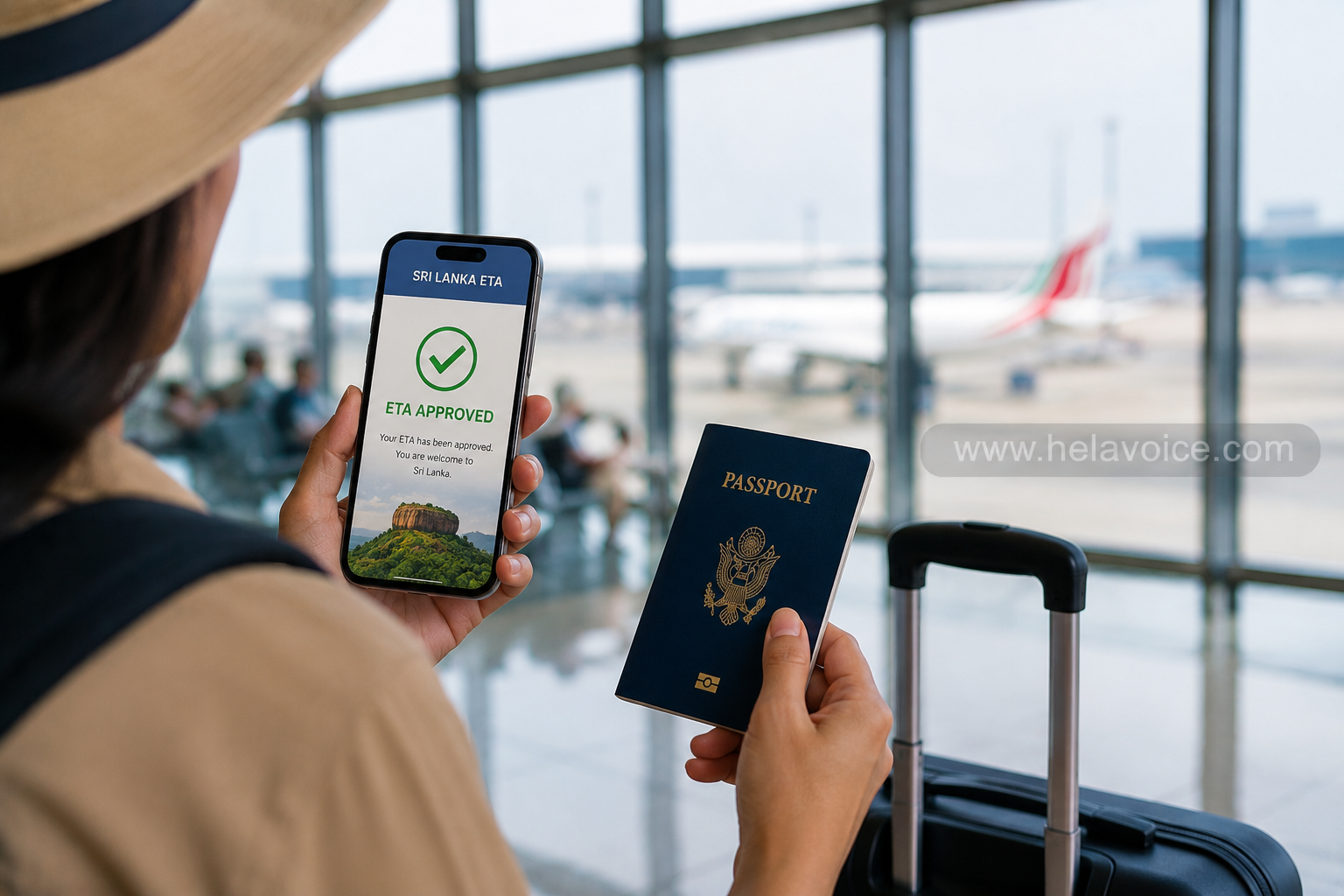
Sri Lanka has officially launched a free Electronic Travel Authorization (ETA) programme for tourists from 40 countries in a major effort aimed at boosting international tourist arrivals and strengthening the country’s recovering travel and hospitality industry.
According to the Department of Immigration and Emigration, the new visa facilitation scheme came into effect from May 25, 2026, allowing eligible foreign nationals to obtain a tourist ETA free of charge for a period of 30 days. Authorities believe the initiative will improve Sri Lanka’s competitiveness as a tourism destination while attracting a larger number of international travellers to the island.
The free ETA facility applies to holders of diplomatic, official, service, and ordinary passports from the approved list of countries.
The countries included under the scheme are Australia, Austria, Bahrain, Belarus, Belgium, Canada, China, Czech Republic, Denmark, Finland, France, Germany, India, Indonesia, Iran, Israel, Italy, Japan, Kazakhstan, Kuwait, Malaysia, Nepal, Netherlands, New Zealand, Norway, Oman, Pakistan, Poland, Qatar, Russia, Saudi Arabia, South Korea, Spain, Sweden, Switzerland, Thailand, Turkey, the United Arab Emirates, the United Kingdom, and the United States of America.
The Department clarified that although visa fees have been waived under the programme, all foreign visitors are still required to obtain an Electronic Travel Authorization before arriving in Sri Lanka. Officials emphasized that the ETA approval process remains mandatory despite the removal of visa charges.
The requirement also applies to travellers from countries already maintaining bilateral reciprocal visa agreements with Sri Lanka, including Maldives, Seychelles, and Singapore. Authorities noted that Maldivian nationals will continue receiving a 90-day tourist visa through the ETA system under the existing agreement between the two countries.
Under the newly introduced scheme, eligible tourists will receive a 30-day tourist ETA with a double-entry facility, allowing them to enter Sri Lanka twice within the visa validity period starting from the date of first arrival.
Authorities further explained that travellers wishing to remain in Sri Lanka beyond the initial 30-day period can apply for visa extensions by paying the relevant extension charges under existing immigration regulations.
The Department of Immigration also stated that ETA fees paid before May 25, 2026, will not be refunded even if applicants are now eligible under the new free visa programme. Meanwhile, visitors from countries not included in the approved 40-country list will continue to be subject to Sri Lanka’s standard ETA rules and applicable visa fees.
For Sri Lanka, the tourism industry remains one of the country’s most important sources of foreign exchange earnings, employment, and economic activity. The sector suffered severe setbacks during the COVID-19 pandemic, the economic crisis, fuel shortages, and political instability experienced in recent years.
Tourism industry stakeholders have widely welcomed the free ETA initiative, describing it as a positive step toward strengthening Sri Lanka’s image as a tourist-friendly destination while encouraging short-term leisure travel, regional tourism, and repeat visitors from major international markets.
Industry experts believe the scheme could particularly help attract travellers from India, China, Europe, and the Middle East — regions considered strategically important for Sri Lanka’s tourism recovery plans. Hotels, transport providers, restaurants, tour operators, and small tourism-related businesses are also expected to benefit from increased visitor arrivals.
The government has increasingly focused on tourism as a key pillar supporting economic stabilization, foreign reserve growth, and investor confidence. Officials are expected to continue introducing additional tourism-friendly measures in the coming months as part of broader efforts to revive the travel sector and position Sri Lanka more competitively within the global tourism market.
Meanwhile, tourism analysts note that easier visa access has become an increasingly important factor influencing travel decisions globally, especially as countries compete aggressively to attract international visitors following the global slowdown in tourism during recent years.
What happens next will largely depend on how effectively Sri Lanka markets the new visa-free initiative internationally and whether global travel demand continues strengthening during upcoming tourist seasons.