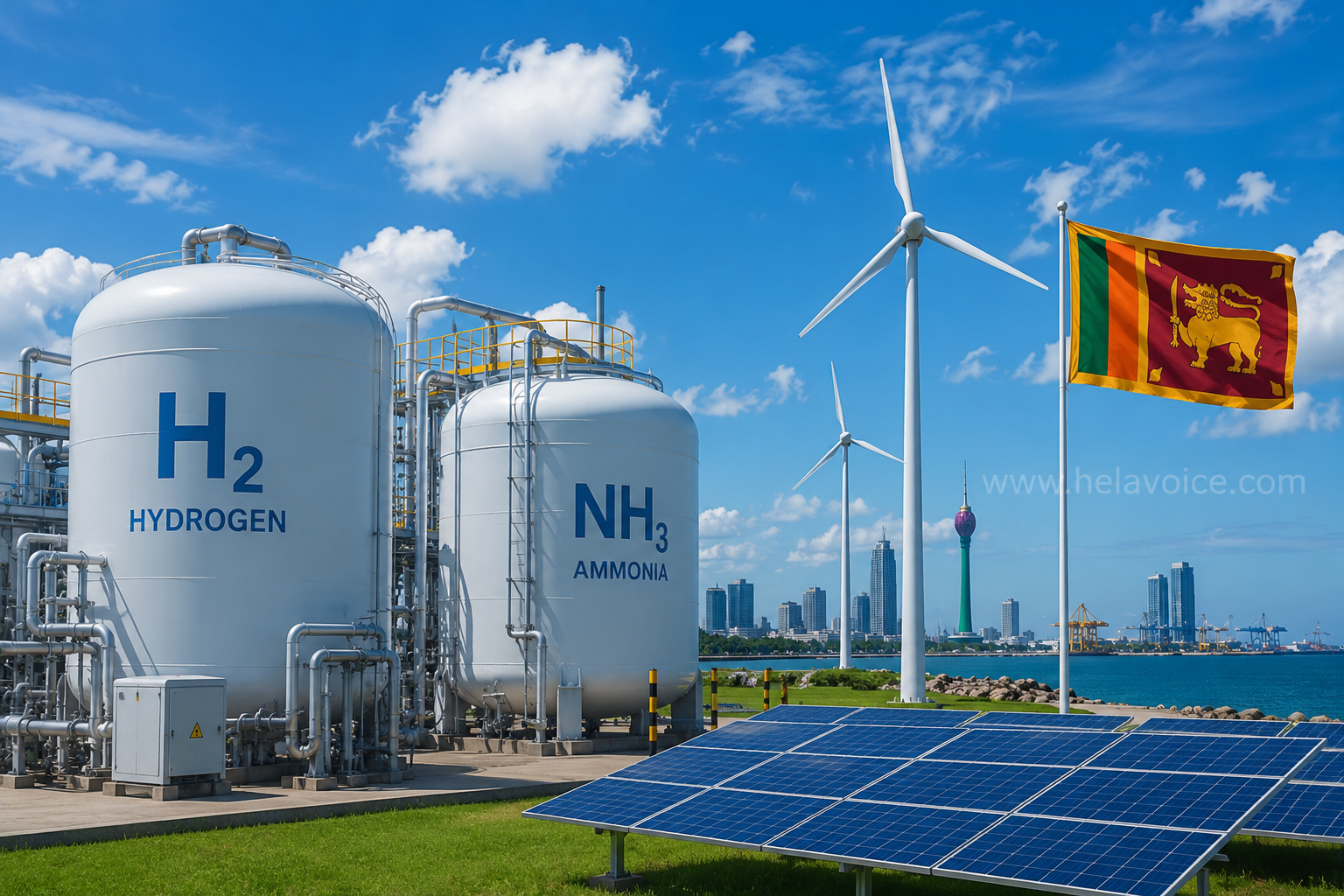
Sri Lanka has officially opened the door for local and international investors to explore large-scale Green Hydrogen and Green Ammonia projects as part of the country’s long-term clean energy strategy.
The Ministry of Energy, together with the Board of Investment (BOI), has launched a Request for Information (RFI) aimed at attracting investors interested in developing renewable energy infrastructure across the island. Officials believe the move could help position Sri Lanka as a future regional hub for green energy production and exports.
The initiative forms part of the government’s broader plan to generate 70% of the country’s electricity through renewable energy sources by 2030 while moving toward carbon-neutral power generation by 2050.
Sri Lanka’s National Hydrogen Roadmap, introduced in 2023, highlights the country’s potential to use its strong wind and solar resources to build a competitive green hydrogen economy. Authorities say the country’s strategic location in the Indian Ocean also makes it attractive for exporting clean energy products to global markets.
Green hydrogen is produced using renewable electricity to split water into hydrogen and oxygen, while green ammonia is created using green hydrogen. Both are increasingly seen as important alternatives to fossil fuels, especially for industries such as shipping, heavy transport, manufacturing, and fertilizer production.
Through the RFI, the government is seeking proposals related to the full green energy supply chain, including production plants, storage facilities, export infrastructure, and component manufacturing.
Officials say the process is currently intended to gather investor interest and technical ideas rather than function as a formal tender. However, projects that align with Sri Lanka’s clean energy goals may receive support and incentives through BOI investment frameworks.
The government has also set an ambitious target of generating USD 1 billion annually from green energy exports by 2030. Industry experts believe the initiative could attract billions of dollars in future investment while creating thousands of skilled jobs in the renewable energy sector.
Interested investors have been invited to submit proposals before June 5, 2026.