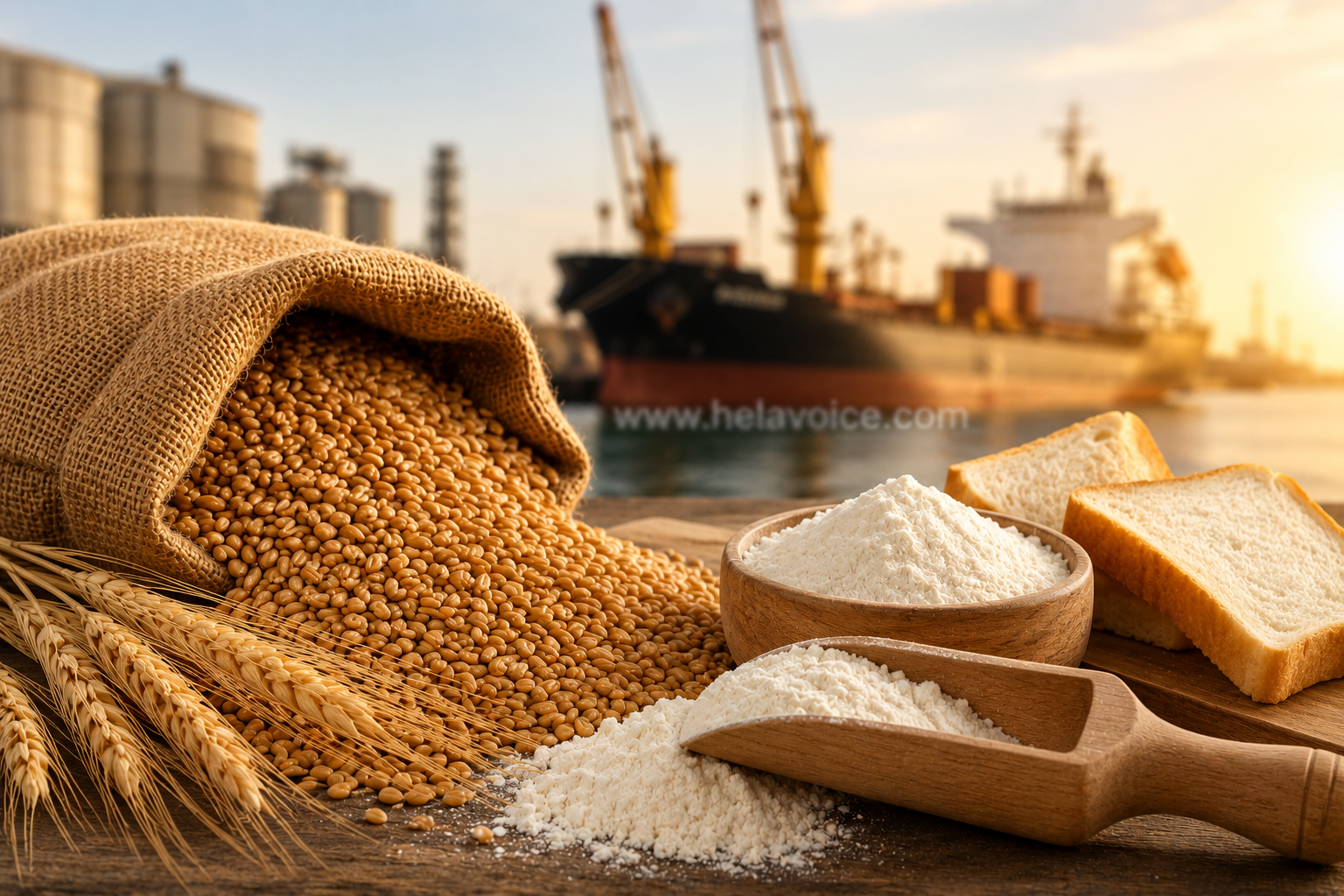
Sri Lanka’s wheat consumption is expected to increase significantly over the next two years as the country’s economy gradually stabilizes and the tourism sector continues its rapid recovery, according to a new report released by the United States Department of Agriculture (USDA).
The report forecasts that Sri Lanka’s total wheat consumption for the 2026/2027 marketing year will rise to approximately 1.1 million metric tonnes, compared to the revised estimate of 1.035 million metric tonnes recorded during the previous year.
According to the USDA, the increase is being driven largely by improving economic conditions and stronger consumer demand as Sri Lanka slowly recovers from the severe financial crisis that affected the country in recent years.
The report pointed to World Bank projections indicating that Sri Lanka’s economy is expected to grow by 3.5% in 2026 and 3.1% in 2027, helping improve household spending and business activity across multiple sectors.
One of the biggest contributors to the rising demand for wheat-based products has been the rapid growth of the tourism industry. International visitors generally consume larger quantities of bread, pastries, pasta, and other flour-based foods compared to the local population, which traditionally relies more heavily on rice as a staple food.
Sri Lanka welcomed more than 2.36 million tourists in 2025 and is targeting around 3 million tourist arrivals in 2026. As hotels, restaurants, bakeries, and tourism-related businesses expand operations to meet growing visitor demand, the need for imported wheat and flour products is also increasing.
The report noted that wheat flour prices in Sri Lanka have remained relatively stable at around Rs. 180 per kilogram in the local market. However, many Sri Lankan households are still struggling to fully return to pre-economic crisis consumption levels due to higher taxes, rising utility bills, and the increased cost of living.
For Sri Lanka, rising wheat demand also highlights the country’s continued dependence on imports for essential food commodities. Since local climatic conditions are unsuitable for wheat cultivation, Sri Lanka relies entirely on imported wheat to meet domestic consumption needs.
The country’s flour processing industry is mainly operated by Prima Ceylon Ltd and Serendib Flour Mills through large-scale facilities located in Colombo and Trincomalee. To meet expected future demand, wheat imports for the 2026/2027 period are forecast to increase to around 1.2 million metric tonnes, although this figure still remains below pre-crisis import levels.
Russia currently remains Sri Lanka’s largest supplier of wheat, followed by Canada and Turkey. Import decisions are primarily influenced by price competitiveness, while higher-quality wheat from countries such as the United States and Canada is generally imported for premium and specialty flour products.
The report also highlighted that despite increased taxes on imported flour, significant volumes of Turkish wheat flour continue entering the Sri Lankan market due to competitive pricing.
Meanwhile, Sri Lanka’s excess milling capacity has enabled local producers to export wheat-based products to several international markets, including the Maldives, Malaysia, Singapore, Cambodia, Hong Kong, and Thailand. Analysts say this could create additional export opportunities if the country’s food processing sector continues to expand.
What happens next will largely depend on Sri Lanka’s economic recovery, tourism performance, global wheat prices, and exchange rate stability. Economists note that sustained growth in tourism and consumer spending could further increase wheat demand in the coming years.