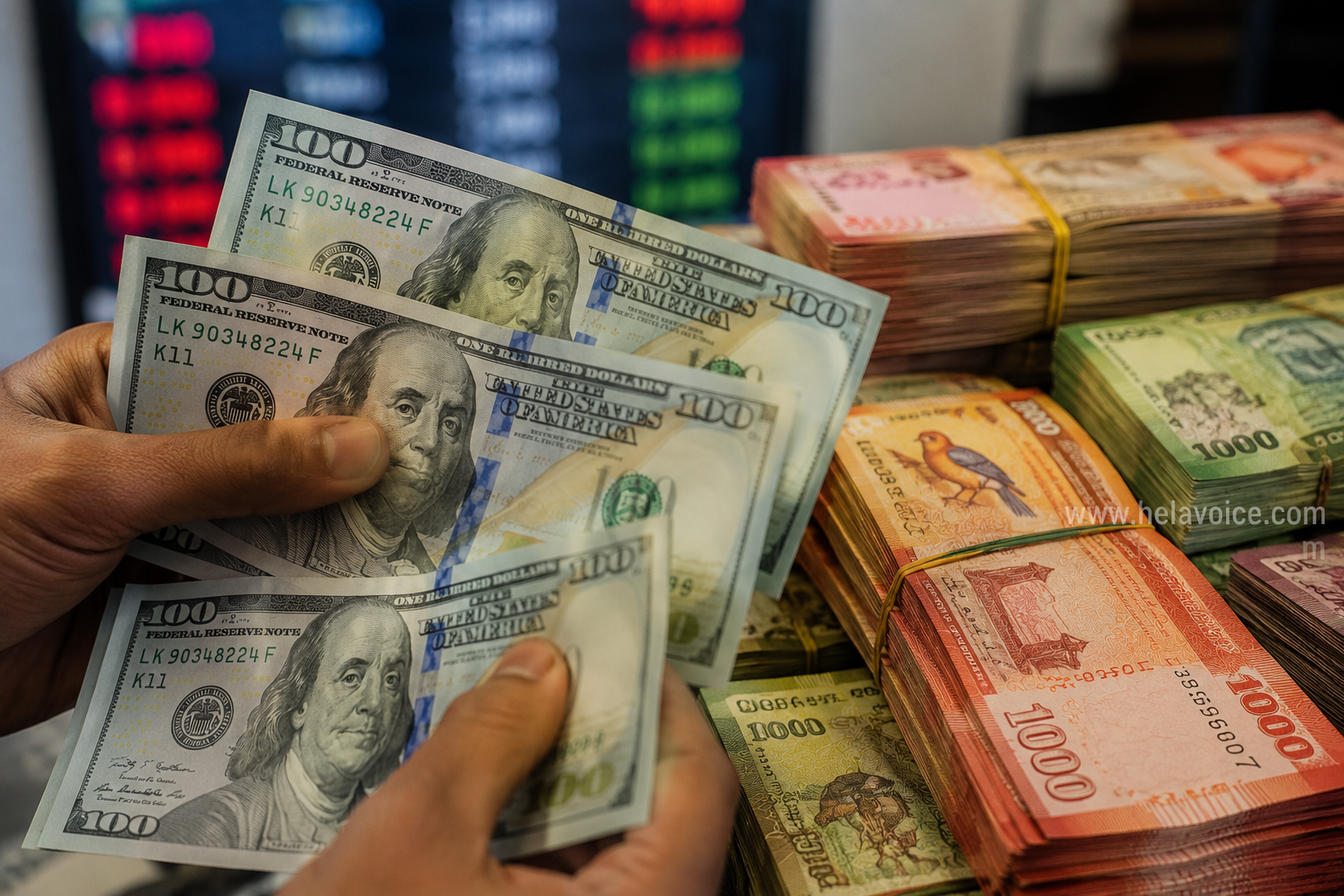
The Sri Lankan rupee has continued to weaken sharply against the US dollar, with the latest exchange rates showing the currency falling to its weakest level in more than two years.
According to exchange rates released today (20) by the Central Bank of Sri Lanka, the buying rate of the US dollar has increased to Rs. 332.08, while the selling rate has climbed to Rs. 342.70.
These are now the highest buying and selling rates recorded for the US dollar since March 20, 2023, signaling growing pressure on Sri Lanka’s foreign exchange market and increasing concerns over the country’s economic stability.
The latest depreciation comes amid rising demand for foreign currency, concerns over import-related pressures, and uncertainty surrounding global financial markets. Economists say movements in the exchange rate are closely tied to foreign reserve levels, import demand, export earnings, tourism income, and investor confidence.
For Sri Lanka, the weakening rupee carries significant economic consequences because the country remains highly dependent on imports for fuel, medicines, food products, industrial equipment, vehicles, and raw materials. A stronger dollar generally leads to higher import costs, which can eventually push up market prices and increase inflationary pressure on consumers.
Businesses involved in importing goods are also expected to face rising operational expenses as exchange rate volatility continues. Importers may be forced to increase prices in order to offset higher dollar costs, potentially affecting retail markets across multiple sectors.
The depreciation of the rupee comes at a time when Sri Lanka is still attempting to stabilize its economy following the severe financial crisis that led to debt default, soaring inflation, and foreign currency shortages in 2022. Although economic conditions showed signs of improvement over the past year under reforms linked to the International Monetary Fund (IMF), currency stability remains one of the country’s biggest financial challenges.
Financial analysts note that sudden movements in the exchange rate can also affect public confidence and business planning, especially for companies dependent on imported products or foreign transactions. Concerns are also growing that a prolonged depreciation could place additional pressure on fuel prices, transportation costs, electricity expenses, and food inflation in the coming months.
However, some export-oriented industries may temporarily benefit from the weaker rupee because Sri Lankan goods become relatively cheaper for foreign buyers. Sectors such as apparel, tea exports, and tourism-related services could see short-term advantages if export demand strengthens.
The government and Central Bank are expected to continue monitoring market conditions closely while relying on foreign financial inflows, tourism earnings, worker remittances, and export growth to stabilize reserves and manage currency volatility. Earlier, government officials stated that upcoming financial assistance from international institutions including the IMF and Asian Development Bank could help reduce pressure on the rupee.
Meanwhile, economists warn that global economic conditions, rising import demand, geopolitical instability, and domestic market confidence will continue playing major roles in determining the direction of Sri Lanka’s exchange rate in the coming months.
What happens next will largely depend on the country’s ability to strengthen foreign reserves, maintain investor confidence, manage imports, and sustain economic recovery efforts under ongoing financial reforms.