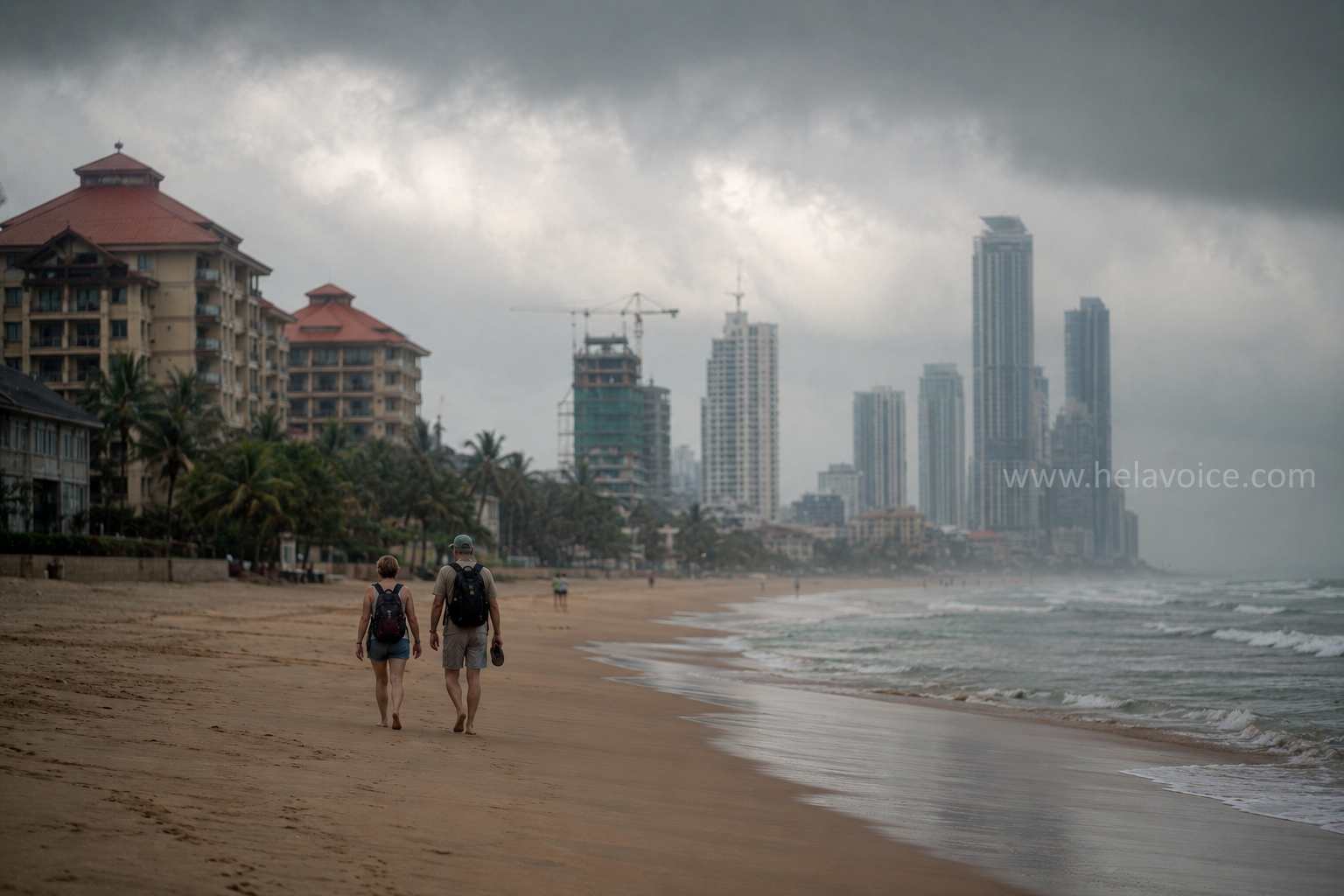
Sri Lanka’s tourism industry has recorded a significant decline in earnings during the first four months of 2026, according to the latest data released by the Central Bank of Sri Lanka, raising fresh concerns about the pace of recovery in one of the country’s most important foreign exchange earning sectors.
According to official figures, Sri Lanka earned approximately US$1.11 billion from tourism between January and April 2026, compared to US$1.37 billion earned during the same period in 2025. This marks a decline of nearly 19.4% year-on-year.
Tourism income for April 2026 alone was reported at US$157.1 million, showing a sharp drop from the US$256.7 million recorded in April last year. The latest figures indicate that visitor spending and overall tourism-related earnings have weakened despite ongoing efforts to attract international travelers back to the country.
Tourism remains one of Sri Lanka’s most critical sources of foreign exchange revenue alongside worker remittances and exports. Following the economic crisis, the sector played a major role in helping the country stabilize foreign reserves and support economic recovery efforts.
Industry analysts say several factors may have contributed to the recent slowdown in tourism income, including global economic uncertainty, rising international travel costs, shifting travel trends, and increasing regional competition from other Asian tourist destinations.
Although Sri Lanka has continued to attract international visitors, experts note that lower visitor spending and shorter travel durations may be affecting total earnings. Some travelers are also believed to be choosing more budget-conscious holidays due to global inflation and economic pressures in key tourist markets.
For Sri Lanka, the decline in tourism revenue could place additional pressure on the country’s foreign exchange inflows at a time when the government is attempting to stabilize the rupee, strengthen reserves, and manage import-related costs. Tourism earnings are particularly important because they directly support hotels, restaurants, transportation providers, small businesses, and thousands of jobs connected to the hospitality industry.
The tourism sector was one of the industries hardest hit during the COVID-19 pandemic and later during Sri Lanka’s economic crisis, fuel shortages, and political instability. While visitor arrivals gradually recovered over the past two years, the latest earnings figures suggest the industry still faces significant challenges in returning to pre-crisis performance levels.
Industry observers also point to increased competition from countries such as Thailand, Vietnam, Indonesia, and the Maldives, which continue investing heavily in tourism infrastructure, global marketing campaigns, and luxury travel experiences aimed at attracting high-spending international visitors.
Meanwhile, Sri Lankan tourism authorities are expected to continue international promotional campaigns and tourism development initiatives targeting key markets in Europe, Asia, the Middle East, and India ahead of upcoming holiday seasons. Officials remain optimistic that visitor arrivals and spending could improve during the latter part of the year if global economic conditions stabilize.
Economists note that stronger tourism performance will be essential for Sri Lanka’s long-term economic recovery, especially in supporting foreign currency reserves, employment generation, and business activity across multiple sectors.
What happens next will largely depend on global travel demand, airline connectivity, regional competition, and Sri Lanka’s ability to position itself as a stable and attractive destination for international tourists in the coming months.