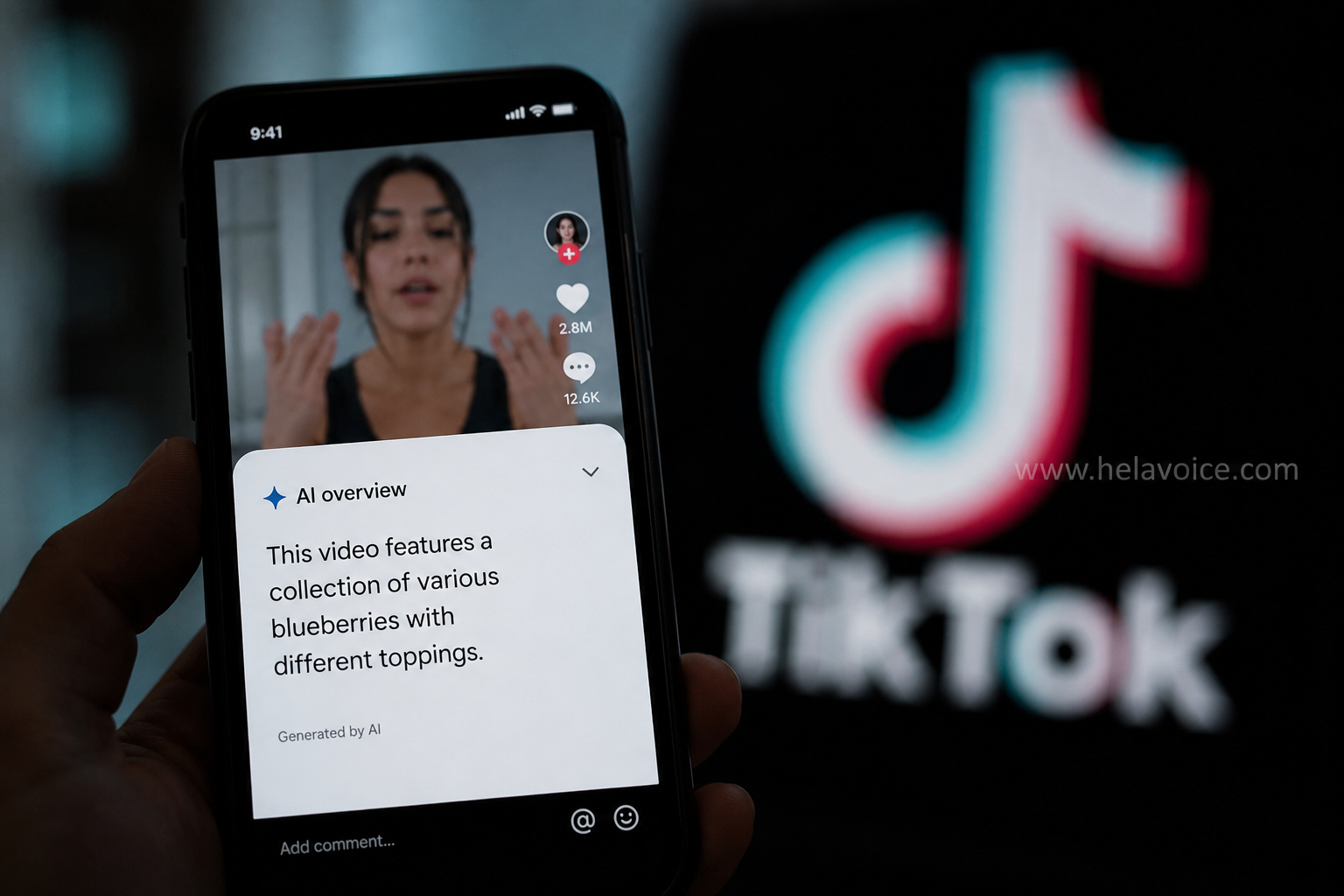
TikTok has reportedly scaled back one of its experimental artificial intelligence features after users began sharing bizarre and inaccurate video summaries generated by the platform online.
The feature, known as “AI Overviews,” had been designed to automatically explain or summarize videos for viewers by generating short AI-created descriptions beneath TikTok content. The tool was reportedly being tested among a limited number of users in countries including the United States and the Philippines.
However, the feature quickly attracted criticism after numerous AI-generated summaries began producing confusing, absurd, and completely unrelated descriptions for videos shared on the platform.
In one widely circulated example, a video featuring popular TikTok creator Charli D'Amelio was reportedly described by the AI system as “a collection of blueberries with different toppings.”
Other users also posted screenshots showing dance videos, comedy clips, and entertainment content being incorrectly identified as violent or unrelated activities. In one unusual case, a dance performance was reportedly summarized as “a person repeatedly hitting their head with a rubber chicken.”
Following the backlash and online ridicule, TikTok has now reportedly modified the feature. According to international media reports, the AI system will now mainly focus on identifying products shown inside videos instead of attempting to summarize entire clips automatically.
The incident has once again highlighted the growing challenges faced by major technology companies attempting to integrate artificial intelligence into social media platforms and content moderation systems. Despite rapid advancements in AI technology, so-called AI “hallucinations” — where systems generate false, misleading, or nonsensical information — remain a major issue across the tech industry.
Similar problems have previously affected AI tools developed by companies including Google and Apple, where AI-generated responses occasionally produced incorrect facts, misleading search summaries, or bizarre recommendations.
For Sri Lanka, the growing influence of AI-driven content systems is becoming increasingly relevant as millions of users rely on platforms such as TikTok, Facebook, Instagram, and YouTube for entertainment, news, shopping, and communication. Concerns over misinformation, algorithmic mistakes, and AI reliability are also becoming part of broader global conversations around digital regulation and online safety.
Technology experts say AI-generated content tools are still evolving rapidly, but companies often face pressure to release experimental features before systems are fully reliable. As a result, users frequently become the first to discover major flaws through real-world testing.
Meanwhile, TikTok users across social media platforms have reacted humorously to the strange AI summaries, with many sharing screenshots and memes mocking the feature’s inaccurate descriptions. Some users even questioned whether the bizarre summaries were intentionally designed as jokes.
Industry analysts note that while AI features may improve user engagement and automation in the future, maintaining accuracy and preventing misinformation remain among the biggest technical and ethical challenges facing modern artificial intelligence systems.
What happens next will likely depend on how TikTok and other technology companies continue refining AI-generated content tools while balancing innovation, user trust, and platform reliability.