The Department of Meteorology has issued a severe weather warning for several parts of Sri Lanka as a low-pressure system developing northeast of the island is expected to bring heavy rainfall, strong winds, and lightning over the coming hours.
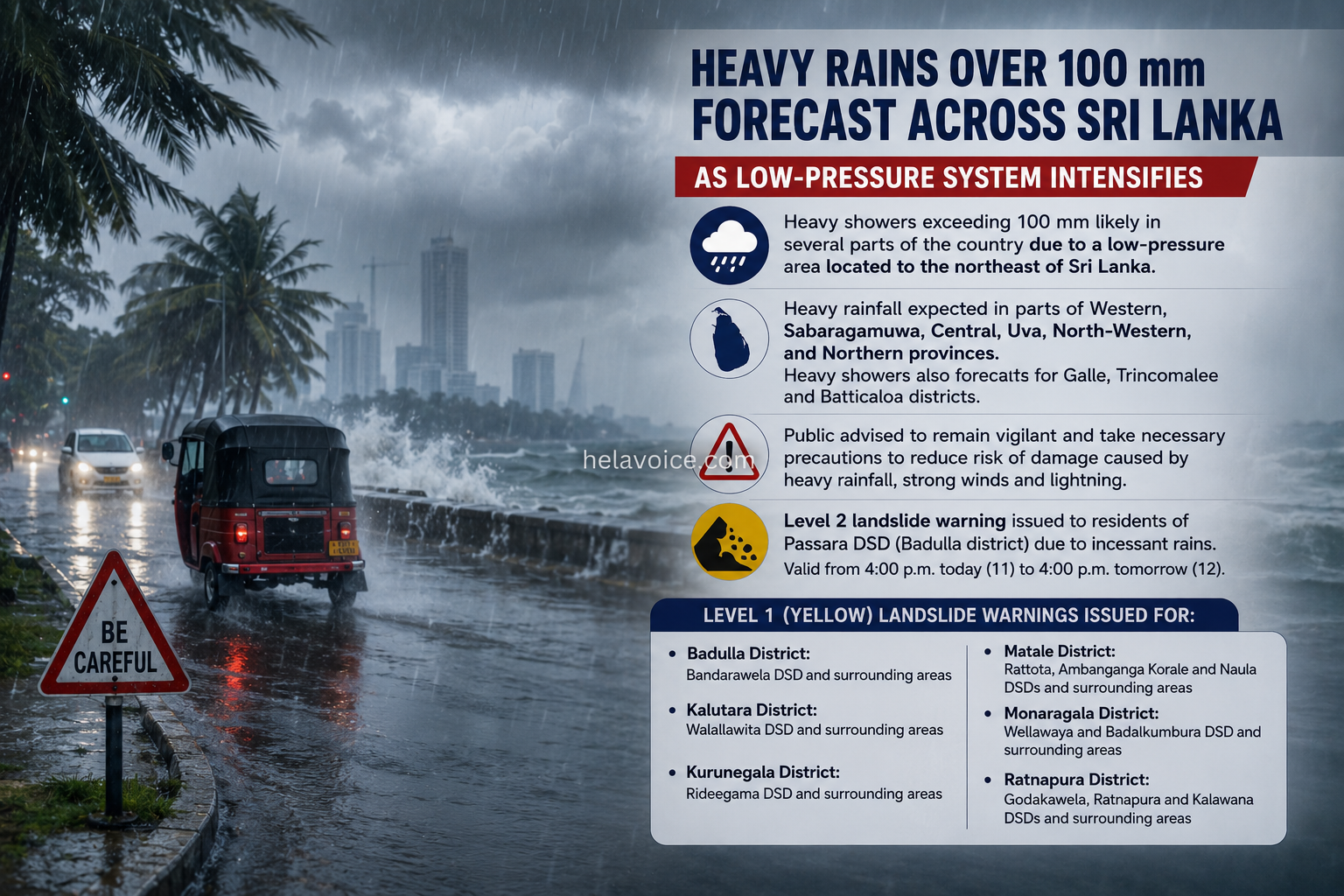
According to weather officials, showers exceeding 100 mm are likely in parts of the Western, Sabaragamuwa, Central, Uva, North-Western, and Northern Provinces. Heavy rainfall is also expected in the Galle, Trincomalee, and Batticaloa districts.
Meteorologists warned that the unstable weather conditions could intensify rapidly, with strong winds and severe lightning activity also expected during thundershowers. Authorities have urged residents in vulnerable areas to remain alert and avoid unnecessary travel, particularly during periods of intense rainfall.
The warning comes as several areas across the country have already experienced continuous rain over recent days, increasing the risk of flooding, falling trees, road accidents, and landslides in high-risk regions. Disaster management officials say the current weather pattern is being closely monitored due to the possibility of worsening conditions.
Meanwhile, the National Building Research Organisation (NBRO) has issued a Level 2 landslide warning for the Passara Divisional Secretariat Division in the Badulla District following continuous rainfall in the area. The warning remains valid from 4:00 PM today (11) until 4:00 PM tomorrow (12).
A Level 2 warning indicates a higher probability of landslide activity and possible danger to people living in vulnerable hillside areas. Authorities have requested residents in the affected region to remain highly cautious and be prepared to evacuate if necessary.
In addition, Level 1 (Yellow) landslide warnings have been issued for several locations across six districts, including Bandarawela in Badulla District, Walallawita in Kalutara District, Rideegama in Kurunegala District, Rattota, Ambanganga Korale, and Naula in Matale District, Wellawaya and Badalkumbura in Monaragala District, and Godakawela, Ratnapura, and Kalawana in Ratnapura District.
Officials have advised residents living near slopes, hillsides, cut areas, and known landslide-prone zones to remain extremely vigilant. People have also been requested to immediately contact disaster management authorities if warning signs such as soil cracks, leaning trees, sudden water seepage, or earth slips are observed.
For Sri Lanka, periods of intense rainfall often create serious challenges for transportation, agriculture, schools, and daily economic activities. Flooding and landslides in previous years have caused significant damage to homes, roads, and infrastructure while also forcing thousands of families to seek temporary shelter.
Disaster management experts emphasize that early warnings and rapid public response are crucial in minimizing loss of life during severe weather situations. Authorities are expected to continue monitoring rainfall patterns and may issue additional advisories if conditions worsen overnight.
What happens next will depend on the movement and strength of the low-pressure system near Sri Lanka. Weather officials say rainfall intensity and affected areas could change quickly over the next 24 hours as atmospheric conditions continue to evolve.
Residents are strongly advised to follow official updates issued by the Department of Meteorology, NBRO, and the Disaster Management Centre rather than relying on unverified social media reports.