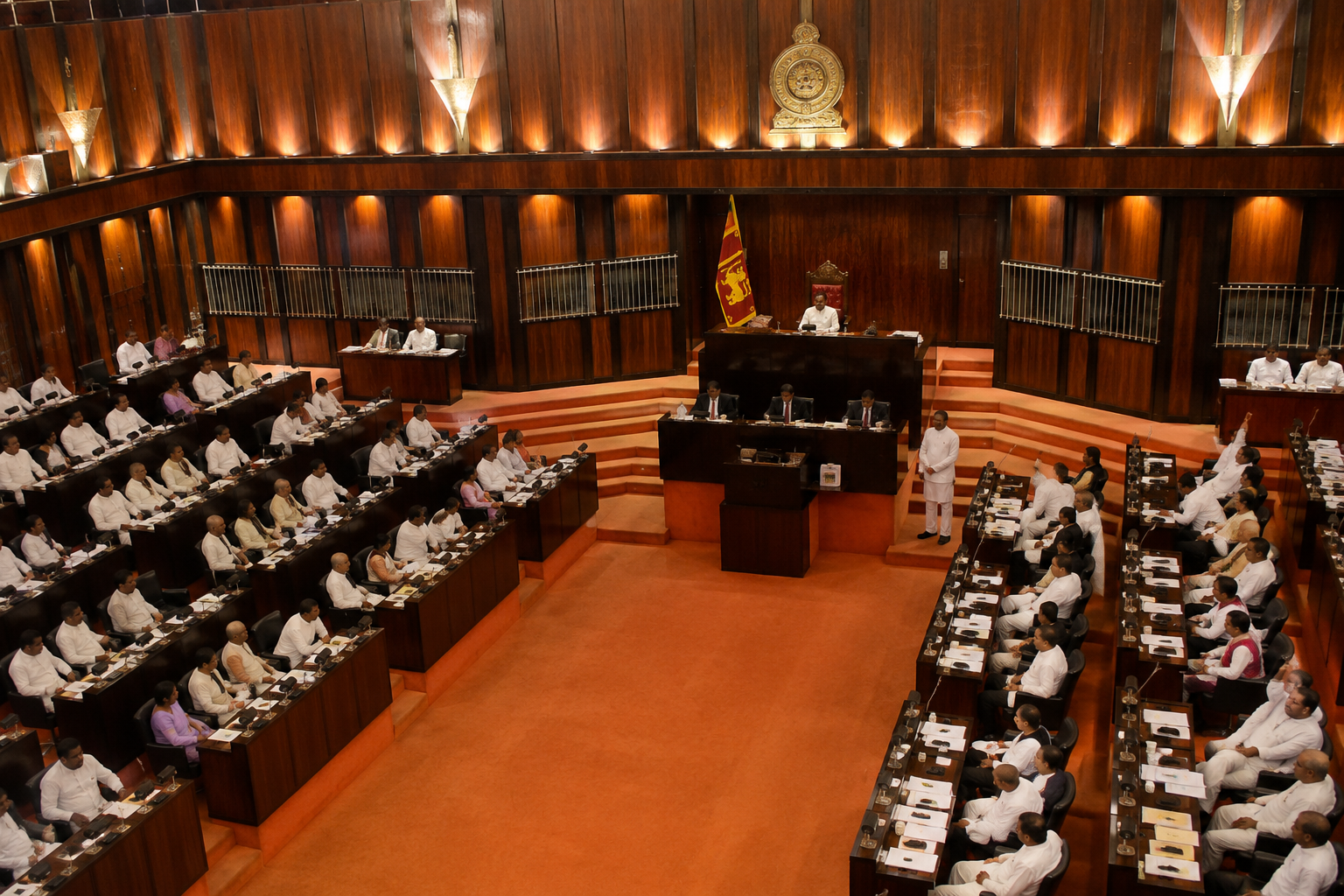
Sri Lanka’s Parliament today (07) approved the extension of the State of Public Emergency under the Public Security Ordinance with a substantial majority, allowing the government to continue enforcing emergency regulations currently in effect across the country.
The motion was passed with 145 Members of Parliament voting in favour, while only six MPs voted against the proposal, giving the government a majority of 139 votes.
The approval means that emergency powers granted under the ordinance will remain active, enabling authorities to continue implementing special security and public order measures deemed necessary by the government.
Emergency regulations in Sri Lanka provide the government and security forces with expanded powers to respond to threats related to national security, public safety, organized crime, and social unrest. These powers can include enhanced law enforcement authority, special detention provisions, and tighter control over activities considered a threat to public order.
The latest extension comes at a time when Sri Lankan authorities have intensified operations targeting organized criminal networks, drug trafficking activities, and underworld groups both within the country and abroad. In recent months, several alleged organized crime figures have been arrested or extradited with the assistance of international law enforcement agencies.
Government representatives argued in Parliament that continuing the State of Emergency remains necessary to maintain national security and ensure stability while ongoing investigations and security operations continue. Supporters of the motion also claimed that emergency regulations help authorities respond more effectively to evolving security challenges.
However, the continued use of emergency powers has historically remained a sensitive issue in Sri Lanka. Human rights groups and opposition politicians have often raised concerns about the prolonged use of emergency regulations, arguing that such powers should be used carefully and only when absolutely necessary.
Sri Lanka has experienced multiple periods under emergency law during times of political unrest, economic instability, civil conflict, and national security crises. As a result, decisions related to emergency powers often attract significant political and public attention.
Political analysts note that the strong parliamentary majority in favour of the extension reflects the current government’s significant control within Parliament. At the same time, opposition criticism is expected to continue regarding how emergency regulations are implemented and monitored.
The extension of the State of Emergency could also influence future security operations, law enforcement measures, and political debates surrounding civil liberties and public governance in Sri Lanka over the coming weeks.
What happens next will depend largely on the evolving security situation and whether the government decides to maintain, amend, or eventually lift the emergency regulations in the months ahead.