President Anura Kumara Dissanayake has instructed government officials not to allow financial constraints or administrative delays to slow down recovery efforts for families affected by Cyclone “Ditwah” in the Badulla District.
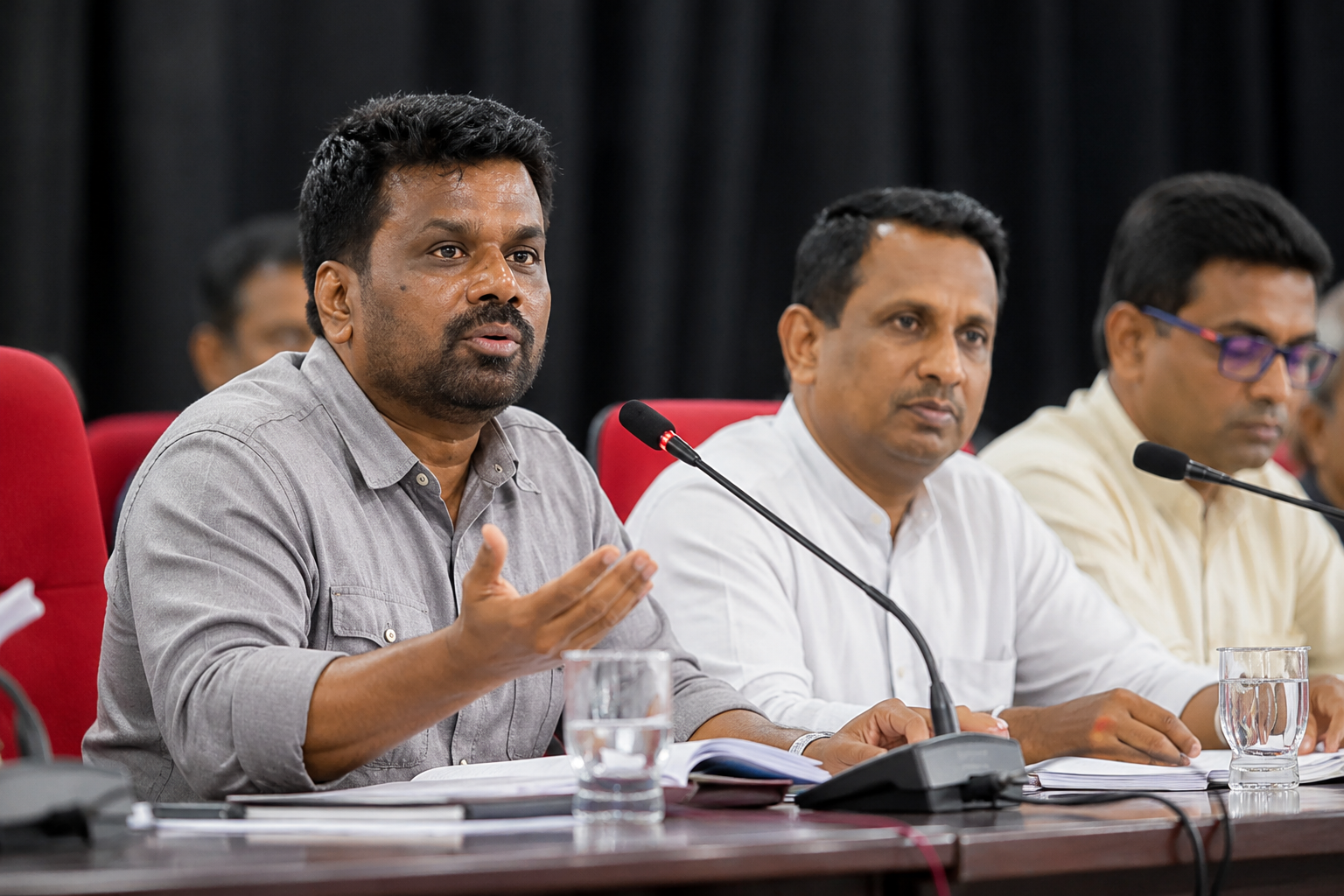
The President made these remarks while attending a Special Coordination Committee meeting held today (13) at the Badulla Library Auditorium to review ongoing disaster recovery operations and infrastructure development activities in the district.
According to the President’s Media Division, the cyclone has affected more than 90,000 people from over 26,000 families across Badulla District, with hundreds of homes either completely destroyed or declared unsafe following severe weather conditions triggered by the disaster.
Officials informed the President that more than 3,400 affected families currently require urgent resettlement assistance. During the meeting, President Dissanayake separately reviewed progress at divisional secretariat level and discussed several obstacles delaying relocation and housing projects.
Special attention was also given to the release of state lands currently occupied by private companies for resettlement purposes. The President instructed authorities to immediately begin construction of permanent houses once final agreements are reached among the relevant government institutions.
President Dissanayake stressed that officials must move beyond bureaucratic procedures and focus on delivering practical solutions to restore confidence and stability among affected communities. He emphasized that families who lost homes and livelihoods should receive permanent solutions rather than temporary assistance alone.
The meeting also reviewed compensation payments related to damaged homes, loss of livelihoods, affected businesses, and deaths caused by the cyclone. Authorities discussed measures aimed at accelerating financial support for impacted families and improving coordination among state agencies.
In addition, significant attention was given to agricultural lands damaged by sand and rock deposits left behind by floods and landslides during the disaster. Officials decided to provide an allowance of Rs. 25,000 per acre to support land restoration efforts with assistance from local farmer organisations.
For Sri Lanka, natural disasters such as cyclones, floods, and landslides continue to place heavy pressure on public finances, infrastructure, agriculture, and rural communities. The Badulla District has experienced repeated climate-related disasters in recent years, highlighting the growing challenges posed by extreme weather conditions linked to climate change.
The President also directed authorities to expedite repairs on all 21 roads damaged under the Road Development Authority’s jurisdiction and ordered that reconstruction work be completed before the end of this year. Restoring transportation infrastructure is considered critical for economic recovery, access to schools, healthcare services, and the movement of agricultural goods.
Disaster management experts note that long-term recovery efforts in affected districts often face delays due to funding shortages, land ownership disputes, and administrative inefficiencies. The President’s latest instructions appear aimed at preventing such delays and accelerating the district’s return to normalcy.
President Dissanayake further stated that the Badulla District should fully recover from the disaster within this year so that development programmes and economic activities can resume more effectively from next year onward.
What happens next will depend on how quickly government agencies implement housing, infrastructure, and compensation programmes in the coming months. Authorities are expected to continue monitoring recovery progress at district and divisional levels.