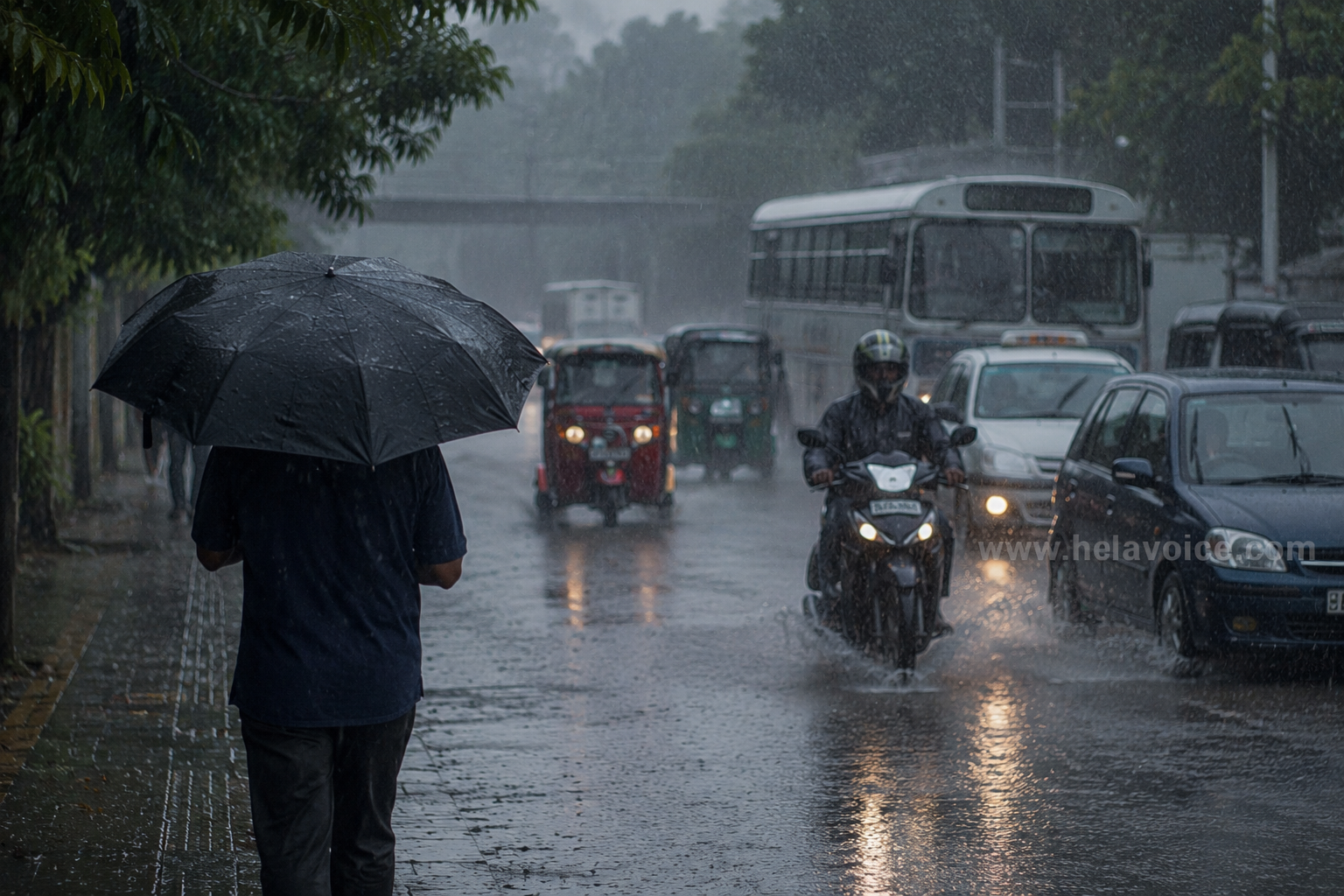
The Department of Meteorology has issued a red warning for heavy rainfall across several parts of Sri Lanka as the low-pressure system located northeast of the island continues to significantly influence weather conditions nationwide.
According to the latest weather advisory released this morning, the low-pressure system is expected to gradually move away from Sri Lanka within the next 36 hours. However, meteorologists warn that severe rainfall and unstable weather conditions are still likely to affect multiple regions during this period.
The Department stated that very heavy showers of around 150 mm are expected in parts of the Western, Sabaragamuwa, and North-Western Provinces. Authorities say these rainfall levels could lead to flash floods, overflowing waterways, landslides, and severe disruptions to transportation and daily activities.
In addition, heavy rainfall exceeding 100 mm is expected in several parts of the Southern Province, particularly within the Galle and Matara districts. Coastal areas may also experience strong winds, rough seas, and dangerous conditions during periods of intense thundershowers.
Officials have strongly urged the public to remain vigilant and take necessary precautions against flooding, strong winds, falling trees, and lightning-related incidents associated with the severe weather system. Residents living in vulnerable and low-lying areas have specifically been advised to avoid unnecessary travel unless absolutely essential.
The latest warning comes as several parts of Sri Lanka have already experienced days of continuous rainfall, causing rising water levels in rivers and increasing the risk of landslides in mountainous and hillside regions. Disaster management authorities are continuing to monitor high-risk locations closely.
For Sri Lanka, severe weather events linked to low-pressure systems and monsoon activity have become increasingly frequent in recent years, often resulting in significant economic losses, damage to infrastructure, disruptions to agriculture, and displacement of families. Climate experts have repeatedly warned that changing global weather patterns may intensify such extreme rainfall events in South Asia.
The Disaster Management Centre (DMC), local authorities, and emergency response teams are expected to remain on standby as the weather system continues to impact the island. Authorities may also issue evacuation notices in high-risk flood and landslide zones if rainfall intensifies further.
Transportation disruptions are also likely in several districts, especially in areas vulnerable to flooding, fallen trees, and reduced road visibility. Fishermen and marine communities have been advised to avoid venturing into rough sea areas until weather conditions improve.
Meanwhile, schools, businesses, and agricultural activities in some affected districts may face interruptions if severe weather continues over the next two days. Farmers are particularly concerned about crop damage due to waterlogging and strong winds.
Meteorology officials emphasized that weather conditions can change rapidly and urged the public to stay updated through official government advisories rather than relying on unverified information circulating on social media.
What happens next will depend on how quickly the low-pressure system moves away from Sri Lanka and whether additional atmospheric instability develops over the surrounding region in the coming days.