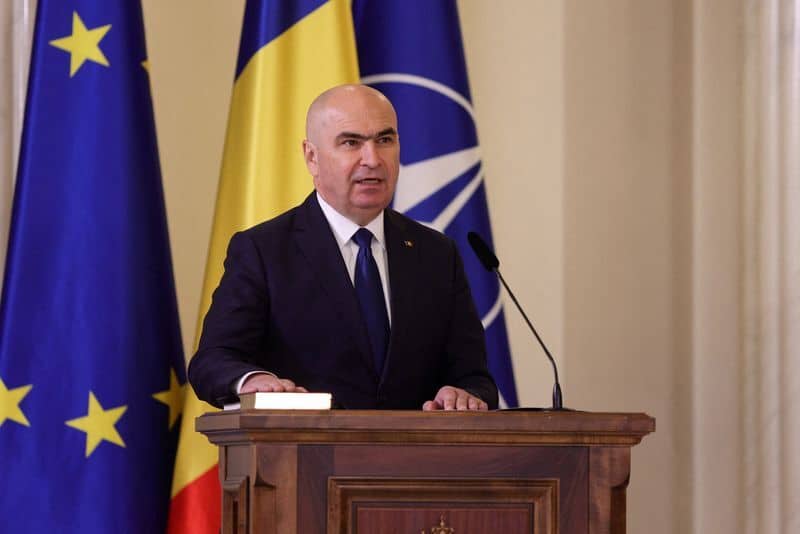
Romania has entered a fresh period of political uncertainty after the country’s pro-European government, led by Prime Minister Ilie Bolojan, collapsed following a successful no-confidence motion passed by lawmakers on Tuesday.
The development is being viewed as a major political setback for the Eastern European nation at a time when Romania is already facing mounting economic pressures and growing concerns over financial stability.
According to international media reports, the no-confidence vote was supported after the Social Democratic Party — the largest political group in Romania’s parliament — withdrew from the ruling coalition and aligned itself with far-right opposition groups to challenge the government.
Prime Minister Ilie Bolojan had been leading a minority administration since late April after cracks began to emerge within the coalition government formed less than a year ago. The alliance had originally been created to counter the increasing influence of nationalist and far-right political movements following a series of highly divisive elections.
Although Romania is not expected to hold an early general election immediately, the collapse of the government has already triggered nervous reactions in financial markets. Analysts note that Romania’s currency, the leu, recently fell to a record low against the euro ahead of the parliamentary vote, reflecting growing investor concerns about political instability.
Economic experts warn that prolonged uncertainty could negatively impact Romania’s ability to reduce its budget deficit, which is currently the highest among European Union member states. There are also fears that instability could affect the country’s credit ratings and delay access to billions of euros in European Union recovery and development funds.
For Sri Lanka, developments in Romania may appear geographically distant, but the situation highlights broader global concerns surrounding economic management, political stability, and fiscal reforms. Sri Lanka itself has experienced similar pressures in recent years, including challenges involving debt restructuring, economic reforms, and maintaining investor confidence during periods of political turbulence.
International financial observers often closely monitor political stability when assessing countries seeking foreign investment or financial support. Analysts say events in Romania serve as another example of how political instability can quickly influence currencies, financial markets, and economic confidence.
Despite the collapse of the government, Ilie Bolojan remains one of the more popular figures within Romania’s pro-European political bloc. Speaking before parliament ahead of the vote, he defended his administration’s economic policies and stressed the need for responsible governance and accountability.
Following the collapse, Romanian President Nicusor Dan is expected to begin consultations with political parties to form a new government. Until a new administration secures parliamentary approval, Bolojan will continue to serve as interim prime minister with limited powers.
What happens next will be crucial for Romania’s economic future, particularly as the country faces pressure to meet European Union financial targets, reduce its budget deficit, and secure access to key recovery funds before upcoming deadlines.