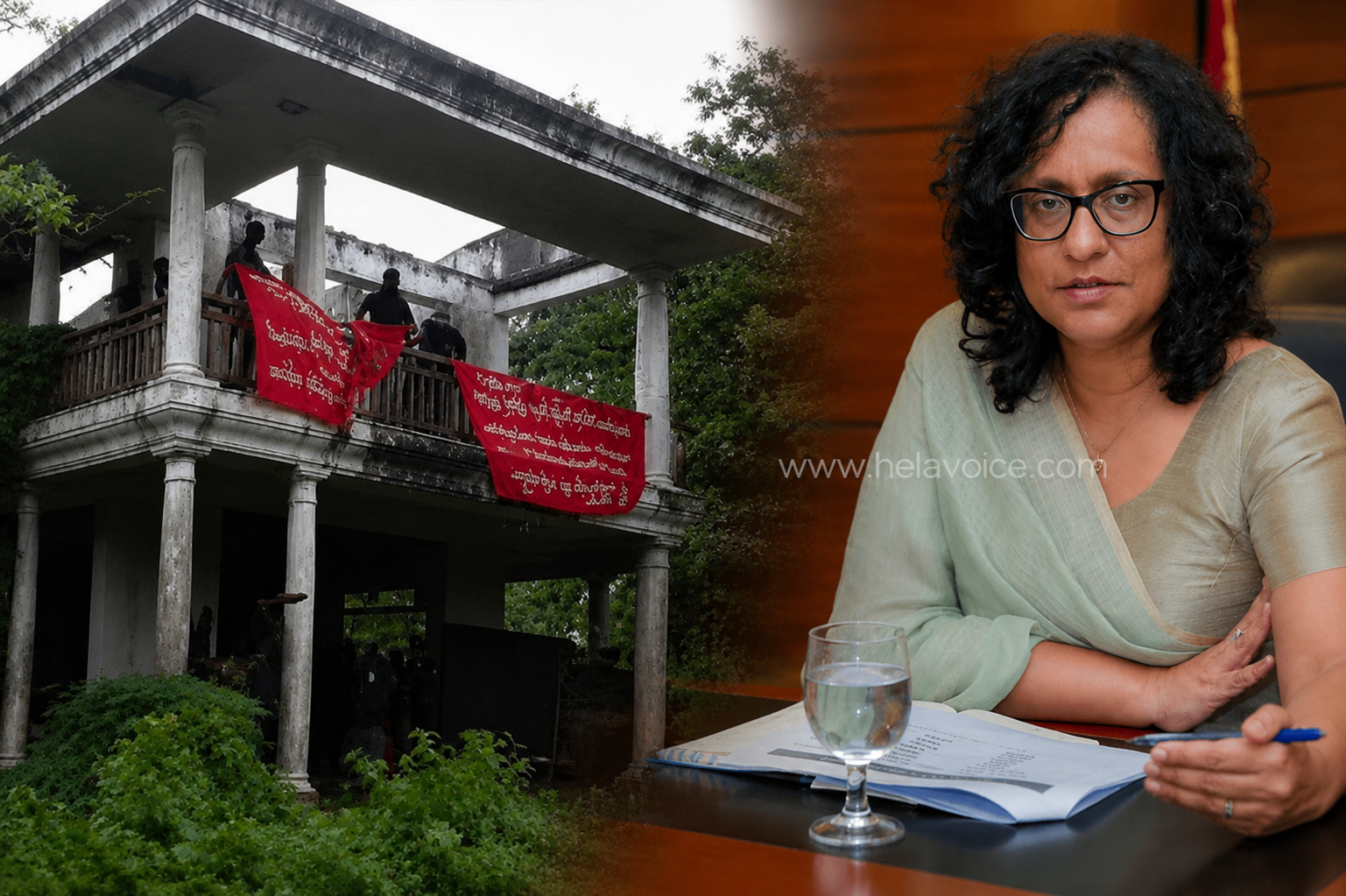
A group of university students who had been occupying the controversial Malwana property since May 1 have agreed to vacate the premises following discussions held today (18) with Prime Minister Harini Amarasuriya.
According to the Inter-University Students’ Federation (IUSF), the Prime Minister agreed during the meeting to transfer the land and house, currently under the authority of the Dompe Divisional Secretariat, to the University Grants Commission (UGC).
Speaking to the media after the discussions held at the Prime Minister’s Office, IUSF Convener Sasindu Perera stated that the government had responded positively to the students’ request and assured that the property would be handed over to the UGC as soon as possible.
Following the agreement reached during the meeting, the students occupying the property decided to leave the premises immediately.
Perera further explained that the decision to vacate the property was taken in good faith after receiving assurances from the government regarding the future use of the land and building for university-related purposes.
The Malwana property issue had attracted significant public and political attention in recent weeks, with growing debate over the ownership, management, and future use of the premises. Student groups had argued that the property should be utilized for educational purposes benefiting the country’s university system.
For Sri Lanka, disputes involving university student unions and government authorities often carry broader political and social significance due to the strong influence student movements have historically held within the country’s political landscape. Student activism has frequently played a major role in national debates surrounding education, governance, and public policy.
The peaceful resolution of the dispute is likely to ease tensions that had been building around the occupation in recent weeks. Authorities and university representatives had faced increasing pressure to find a negotiated solution rather than allowing the situation to escalate further.
The University Grants Commission is the main body responsible for overseeing Sri Lanka’s state university system, including the management of higher education infrastructure and development projects. If the property is officially transferred to the UGC, discussions are expected regarding how the premises may be used for educational or student-related activities in the future.
Political observers say the government’s decision to engage directly with student representatives may reflect an effort to avoid confrontation and maintain dialogue with university unions, which have historically organized large-scale protests and demonstrations over various national issues.
Meanwhile, the resolution of the Malwana property dispute could also influence future discussions involving unused state properties and demands for increased educational facilities and student resources within Sri Lanka’s higher education sector.
What happens next will depend on how quickly the legal and administrative procedures for transferring the property to the University Grants Commission are completed in the coming weeks.